NATIONAL INSTITUTE OF FILM AND FINE ARTS

MEMBER OF NATIONAL FILM ARCHIVE , GOVT.OF INDIA & AFFILIATE TO THE FEDERATION OF FILM SOCIETIES OF INDIA

35A, TOWN SHEND ROAD, BHAWANIPUR, KOLKATA-700025, WEST BENGAL

ESTD.-1990

About

32 +

Years Of Excellence

The Full Story

About N.I.F.F.A

National Institute of Film and Fine Arts (NIFFA), was founded in 1990, by Late Dhiresh Ghosh, former Head of the Department of Direction, FTII, (Pune). At that time with him there were several eminent personalities from our film industry, like Late Jnanesh Mukherjee, Late Asit Sen, Late Satya Banerjee, Late Samiran Dutta,Late Jochan Dostida, Late Tarun Kumar etc. NIFFA is a registered non-profit-making society devoted to career development programmes in the film industry and allied fields. Currently, the reigns of NIFFA are in the able hands of a few resourceful and respected personalities from the film and allied industries. They include Bijon Sensarma (President) and Sudipta Dey (General Secretary).

NIFFA is an affiliated society of Federation of Film societies of India and a member of National Film Archives of India, Pune and hence enjoys all the facilities for the screening of world classics from time to time. These films in fact are used as text films and are analysed in detail by veteran teachers. At present the Society runs Workshop/courses in a wide range of subjects like acting, direction, Cinematography, non-linear Film editing, Music Direction etc. The Training programmes at NIFFA reserved for its member only and all senior & experienced member of the Society take part to conduct workshop, seminars and various classes for the junior member of the Film society. Some times those workshops or classes are conducted by veteran film-makers and artists as well as by former members of academic staff and Diploma holders of FTII, Pune. Special classes, workshops and seminars are occasionally conducted by eminent celebrities from the Film and Video world. Before getting this facility one should be the member of the society first, after that he/she will get those facilities.

Story about foundation

TO EVERY REVOLUTION, THERE'S A NEW BEGINNING

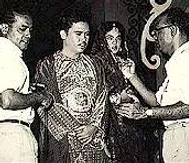
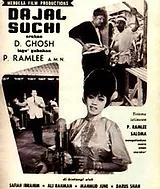
NATIONAL INSTITUTE OF FILM AND FINE ARTS (NIFFA ) WAS ESTABLISHED IN 1990 BY THE FORMER HEAD OF THE DEPARTMENT OF DIRECTION OF FTII. MR. DHIRESH GHOSH. Mr. GHOSH WAS A FILM DIRECTOR FOR THE FAMOUS SHAW BROTHERS OF MALAYSIA. IN 1991 MANY OTHER EMINENT FILM PERSONALITIES GOT INVOLVED WITH HIM TO MOVE NIFFA FORWARD . THEY WERE THE LATE JNANESH MUKHERJEE, FILM DIRECTOR LATE ASIT SEN, LATE TARUN KUMAR, LATE SATYA BENERJEE, LATE JOCHON DOSTIDER, ART DIRECTOR LATE PRASAD MITRA, SOUND RECORDIST LATE SATYEN CHATTERJEE, MUSIC DIRECTOR LATE AJAY DAS. THEY ARE TILL NOW THE PROUD OF BENGAL AND WE TOO ARE PROUD FOR THEM.

LATE JNANESH MUKHERJEE

in 1991 he joined with NIFFA and after the death of Mr. D. Ghosh he took the Principal's chair as first elected Principal of the Institute by the Governing body. Till June 21, 2006, he was the principal of NIFFA.

LATE JNANESH MUKHERJEE in 1991 he joined with NIFFA and after the death of Mr. D. Ghosh he took the Principal's chair as first elected Principal of the Institute by the Governing body. Till June 21, 2006, he was the principal of NIFFA. In 1992 he took initiative to affiliate the society under the Federation of Film Societies of India and since 1992 NIFFA has been an affiliated society of Federation of Film Societies of India.

Professional Achievements

  • 1950: He took membership at IPTA
  • 1960: He formed a group theatre—“Mass Theatre”
  • 1952: He acted in his first Bengali Film “Paser Bari” directed by Sudhir Mukherjee
  • 1960: He joined Biswarupa Ranga Mancha, for the first time, as an actor in “Down Train”
  • He had acted in and directed 26 Mass Theatre Production—“Maxim Gorki’r Maa”, “Krush Bidhya Cuba”, “Harener Nat Jamai”, “Nildarpan”, etc.
  • He had acted in and directed 21 Professional Stage Production—“Mallika”, “Na”, “Bilkis Begum”, “Aghatan”, etc.
  • He had acted in 128 Bengali films (in various small and big characters) under stalwart directors of India—Rithik Ghatak’s “Meghe Dhaka Tara”, “Jukti Tokko Goppo”; Mrinal Sen’s “Baise Sraban”, “Akash Kusum”, “Mrigaya” (Hindi); Satyjit Ray’s “Abhijan”; Rajen Tarafdar’s “Ganga”, and many more.
  • He had directed 3 films—“Achena Athiti” with Sukhen Das; “Banasri Basu” and “Sikarokti” were self-directed.
  • He had acted in and directed famous plays at IPTA productions like “Rahu Mukta”, “Bishe Jun”, “Naukadubi”, and more.
  • He had directed 14 Jatra Palas at Chitpur—“Masterda Surjo Sen”, “Chaitanya Mahaprabhu”, etc.

Portfolio

  • in 1996, he served as the Vice President of West Bengal Natya Academy
  • Between 2002 and June 21, 2006 (time of this death), he served as the President of West Bengal Natya Academy
  • in 1991 he joined with NIFFA and after the death of Mr.D.Ghosh he took the Principal's chair as first elected Principal of the Institute by the Governing body.Till June 21, 2006, he was the principal of NIFFA.
  • in 1992 he took initiative to affiliated the society under the Federation of Film Societies of India.
  • He was the faculty of Drama section of Rabindra Bharati University, Jorasakho, Kolkata

Major Award

In 1993 he was awarded "Dinabandhu Award" by West Bengal Sangeet Academy

Late Asit Sen

First elected Vice Principal of the Institute .In 1996 Asit Sen introduced video editing courses and worked for the development of the society, encouraged us to accept modern technologies of film making.

Asit Sen (24 September 1922 – 25 August 2001) was an Indian film director, cinematographer and screenwriter, who worked both in Bengali and Hindi cinema. He was born in Dhaka now in modern day Bangladesh when it was part of East Bengal in British India. He directed 17 feature films in Hindi and Bengali, most known for films, Deep Jweley Jai (1959) and Uttar Falguni (1963) in Bengali, Mamta (1966), Khamoshi (1969), Anokhi Raat (1968) and Safar(1970) in Hindi.

Career

Sen started his career, assisting auteur Bimal Roy at New Theatres in Kolkata, however Kolkata based film industry was now on the decline, thus Roy shifted base to Bombay (now Mumbai) along with his team in 1950, which included Sen, Hrishikesh Mukherjee, Nabendu Ghosh, Kamal Bose and later Salil Chaudhury, and by 1952 he has restarted the second phase of his career with Maa (1952) for Bombay Talkies.[2] Though he had made Assamese film, Biplabi (1948), after his shift, he made his Hindi film debut with Parivaar (1956), produced by Bimal Roy and starring Kishore Kumar, and Usha Kiran, however he continued working in Bengali cinema. He assisted Roy in Parineeta (1953) and Biraj Bahu (1954). Next he made Bengali film,Chalachal in 1956 starring Arundhati Devi, which was a success, many years later he remade the film in Hindi as Safar, which was also a hit.[3] In 1959, he made Deep Jwele Jaai (1959) starring Suchitra Sen set in a psychiatric hospital, which again he remade in Hindi, as Khamoshi in 1969, with Rajesh Khanna and Waheeda Rehman.[4] In Mamta (1966) remake of his 1963 Bengali film Uttar Falguni, a story about class conflict, he excelled as a storyteller. The film had lead actress Suchitra Sen in a double role, and featured memorable songs, Rahen Na Rahen Hum sung by Lata Mangeshkar and her hit duet, Chuppa Lo Yun Dil Mein Pyar Mera with Hemant Kumar.[5] He joined National Institute of Film And Fine Arts in 1993 as the Vice principal of the organisation and till his death he was served for film education for the society.

Sen worked with some of the most prominent actors in Bollywood during his career. As a director in Sharafat (1970) he directed Dharmendra, Hema Malini and Ashok Kumar, in Annadata (1972) he directed Jaya Bachchan, in Maa Aur Mamta(1970), Ashok Kumar, in Mamta (1966) he directed Suchitra Sen, Ashok Kumar and Dharmendra, and in Bairaag he directed Helen, Madan Puri and Kader Khan. In Anari (1975) he directed actors such as Shashi Kapoor, Sharmila Tagore,Moushumi Chatterjee and Kabir Bedi.

Sen was nominated twice for Filmfare Best Director Award, and won once. He was nominated for his direction of Mamta in 1967, and won the award in 1971 for Safar, which starred Rajesh Khanna, Sharmila Tagore and Feroz Khan. He died at a Kolkata hospital on 25 August 2001 at the age of 79. He is survived by his only son Partha Sen.

Late Samiran Dutta

Former Principal, NIFFA. Former professor of FTII, pune. Chief Asst. of Let Writwik Ghatak. Several time National Awarded Director

Career

Mr. Samiran Dutta was started his Film carrier as the chief Asst.Director of Ritwik Ghatak After that He joined in FTII as a teacher of the direction Dpt. After FTII he joined Film Development Corporation of India as regional chief of the eastern region. In his life , he had made several documentary & Feature Films. He Had taken Three times National award for his work. After film develop corporation of India he was joined with Mr. Dhiresh Ghosh to establish National Institute of Film & Fine Arts. As an founder member of the said society he was devoted his life for his students and organisation. He was the second Elected principal of the Institute after Late of Jnanesh Mukherjee. We lost him for ever on 12th December, 2014.

Late Debraj Roy

Veteran Indian actor and newsreader known for his work in Bengali cinema and Doordarshan

Career

Film Debut: He made his feature film debut as Tunu in Satyajit Ray’s acclaimed film Pratidwandi (1970). Breakthrough: He gained widespread recognition for his performance in Mrinal Sen’s Calcutta 71 (1971). Notable Works: His filmography includes prominent titles like Dinen Gupta's Marjina Abdulla (1973), Ganadevata (1978), City of Joy (1992), and numerous other Bengali films. Broadcasting: Beyond cinema, he was a well-known newsreader for Doordarshan Kendra (DDK) Kolkata and worked extensively in radio dramas with Akashvani Kolkata.

Late Raja Sen

Former Principal and President of the organisation, Three-time National Award-winning director ,Damu & Atmiyo Swajan, Acclaimed directorial milestones, NIFFA Principal & President, 24 years of academic leadership, 3 National Awards, Feature, documentary & family welfare

Career

Raja Sen (10 November 1955 – 16 August 2026) was a distinguished Indian film, television, and documentary director based in Kolkata. Over a career spanning several decades, he established himself as one of Bengal's most versatile humanistic storytellers, earning three National Film Awards across feature cinema, cultural documentaries, and social drama.

Alongside his creative pursuits, Sen was deeply committed to film education, serving for 24 years as the Principal and President of the National Institute of Film & Fine Arts (NIFFA) in Kolkata, where he mentored generations of aspiring directors, technicians, and actors.

Major Works & Career Highlights

Feature Films & Television Damu (1997): His debut feature film won the National Film Award for Best Children's Film and the Shiromani Puraskar.

Atmiyo Swajan (1999): Bagged the National Film Award for Best Film on Family Welfare, showcasing his ability to capture intricate family dynamics on screen.

Atmiyo Swajan (1999): Bagged the National Film Award for Best Film on Family Welfare, showcasing his ability to capture intricate family dynamics on screen.

Television Serials: Shot to national television fame with classics such as Subarnalata, Adarsha Hindu Hotel, and Arogyo Niketan.

Documentaries: Sen made significant contributions to preserving Bengal's art and culture through extensive non-fiction profiles

Suchitra Mitra (1993): Won the National Film Award for Best Arts/Cultural Film.

Documentary Retrospectives: Captured living legends including Tapan Sinha (Filmmaker for Freedom), Sombhu Mitra, Subhas Mukhopadhyay, and folk art forms like Alkaap

Key Accolades Award Category / Work Year, National Film Award Best Arts/Cultural Film (Suchitra Mitra) 1993, National Film Award Best Children's Film (Damu) 1997, National Film Award Best Film on Family Welfare (Atmiyo Swajan) 1999, Shiromoni Award Best Film (Damu) 1997, Dhaka International Film Fest Juvenile Audience Award (Damu) 2000 .

Academic Legacy at NIFFA As the long-standing Principal and President of NIFFA in Bhawanipur, Kolkata, Raja Sen shaped the institute's practical curriculum, ensuring students received hands-on exposure to direction, scriptwriting, and visual storytelling. He frequently served on jury panels for the National Film Awards and the Indian Panorama, bringing real-world industry perspectives straight into the classroom.